Meditation is Hard Work

New England 2007-23 I began my meditation commitment about two weeks ago.

I enjoy the sitting still and breathing for about 30 seconds, then my mind wonders, I start to fidget, I open my eyes and look at the clock and it hasn’t even been 30 seconds, try 15 seconds. But I do what I’ve read, take it easy on myself, bring myself back to my breath, relax my shoulders and try again.

I have been reading more about meditation and the practice that is going “mainstream” and found this article in the New York Times by Tony Schwartz, More Mindfulness, Less Meditation that had some interesting points.

Here’s the promise: Meditation – and mindfulness meditation, in particular – will reduce your cortisol level, blood pressure, social anxiety and depression. It will increase your immune response, resilience and focus and improve your relationships — including with yourself. It will also bolster your performance at work and provide inner peace. It may even cure psoriasis.”

Wow, if it’s this great why isn’t it required in school just like gym and health class? And now it is really becoming the fad de jour when Rappers and Silicon Valley folks are getting on board, not to mention the Seattle Seahawks.

50 Cent meditates. So do Lena Dunham and Alanis Morissette. Steven P. Jobs meditated, and mindfulness as a practice is sweeping through Silicon Valley. A week from Saturday, 2,000 technology executives and other seekers will gather for a sold-out conference called Wisdom 2.0, suddenly a must-attend event for the cognoscenti.

The author, Mr. Schwartz, has been a regular meditator for nearly 25 years according to his article and wrote a book about it called “What Really Matters: Searching for Wisdom in America” but his years of experience tell him that it isn’t a magic cure for all that ails you. He writes,

The simplest definition of meditation is learning to do one thing at a time. Building the capacity to quiet the mind has undeniable value at a time when our attention is under siege, and distraction has become our steady state. Meditation – in the right doses — is also valuable as a means to relax the body, quiet the emotions and refresh one’s energy. There is growing evidence that meditation has some health benefits.

What I haven’t seen is much evidence that meditating leads people to behave better, improves their relationships or makes them happier.”

 He goes on to write;

“Consider what Jack Kornfield has to say about meditation. In the 1970s, after spending a number of years as a monk in Southeast Asia, Mr. Kornfield was one of the first Americans to bring the practice of mindfulness to the West. He remains one of the best-known mindfulness teachers, while also practicing as a psychologist.

“While I benefited enormously from the training in the Thai and Burmese monasteries where I practiced,” he wrote, “I noticed two striking things. First, there were major areas of difficulty in my life, such as loneliness, intimate relationships, work, childhood wounds, and patterns of fear that even very deep meditation didn’t touch.”

I don’t expect meditation is going to solve all my problems, but I hope if I keep practicing that it might bring me a little bit of peace, help me focus more on what matters and help me understand myself a bit better. Maybe I am asking too much?

Mr. Schwartz’s column also gives some suggestions about starting with the basics. I might need the remedial class!

“First, don’t expect more than it can deliver.

Second, start simply.

Third, don’t assume more is better.”

The three steps in the article include more practical advise about using it wisely including this comment from Catherine Ingram, author of “Passionate Presence“,

“There is a difference between mindfulness meditation and simple mindfulness. The latter isn’t a practice separate from everyday life. Mindfulness just means becoming more conscious of what you’re feeling, more intentional about your behaviors and more attentive to your impact on others.”

I see both mindfulness and meditation with possibilities for improving me. If I improve me, I can use what I learn to improve things for others in and around my life. So I will keep trying, two minutes at a time.

Do you meditate yet? Why not – everyone else is!
Getting Grumpy

IMG_0098 Men get grumpy around age 70 – No Kidding!

A recent NPR piece caught my attention this week. The Grumpy Point: When a Man Turns 70. They were looking at a study published in the March 2014 issue of Psychology and Aging about how men approach their “Golden Years”. I wrote previously about how my husband is not very impressed with his “F’ing Golden Years“.

Gerontology professor, Carolyn Aldwin, from Oregon State University and the lead author on the study says;

““Some older people continue to find sources of happiness late in life despite dealing with family losses, declining health, or a lack of resources,” she said. “You may lose a parent, but gain a grandchild. The kids may leave the house, but you bask in their accomplishments as adults. You find value in gardening, volunteering, caregiving or civic involvement.”

Aging is neither exclusively rosy nor depressing, Aldwin said, and how you react to hassles and uplifts as a 55- to 60-year-old may change as you enter what researchers call “the fourth age,” from 75 to 100, based on your perceptions and/or your life experiences.”

“The Fourth Age” is an interesting concept, with more and more people getting to those magic numbers, but ill-equipped  for the costs mentally and physically of that age. My husband is in this group now and has definitely been experiencing the challenges that come with age; more health complications, his energy levels isn’t the same, he gets upset that his mind just isn’t as sharp as it used to be. He says his head still feels like he’s 40, but he definitely knows his body is now in “the fourth age” and it is tough on him.

Little things seem to upset him the way they never used to, silly stuff like spilling something or the dogs fighting or kids making noise in the neighborhood, he just no longer has a tolerance for any of it. The cranky curmudgeon is what I like to call him sometimes. The good thing is it generally only lasts a short time and then the mental laps kicks in and he forgets why he was mad in the first place.

Are you in the “Fourth Age” or dealing with someone that has gotten grumpy?


The 20 Year Regret

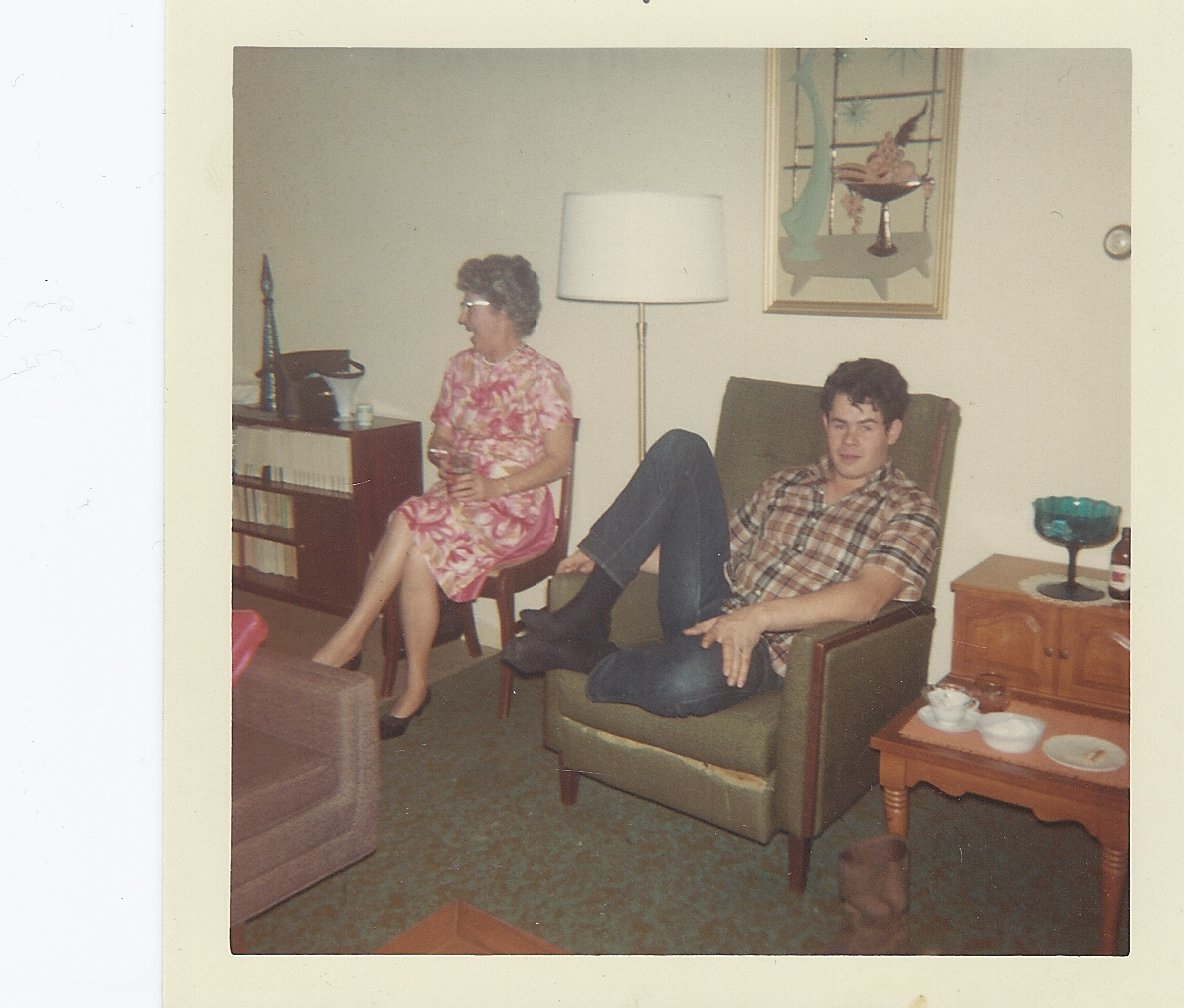
SCAN0019  My father died 20 years ago!  Today would have been his 67th birthday.

Over the years I have had varying opinions of my father. The fun weekend dad who bought me a toy, took me to dinner at McDonalds and drove me fast in his old Corvette. But other times I thought of him as a self-centered little boy who acted like the world owed him something and he owed no one anything.

He was both smart and dumb, lazy and a hard worker, fun and an asshole.

I didn’t speak to him for the last three years of his life – we’d had a dispute over how he was living his life, how he had treated my grandmother before her passing, he was mad that I had not visited him while he was in jail(tax stuff- nothing hard-core) and mostly about money he felt I owed him from the estate of my grandmother. Nothing really that should have stopped a normal father-daughter relationship, but nothing normal here.

I was 27 when he died. That seems like a fairly mature age, but until I did the math I actually had it in my head that I was 24 when he died, I remember feeling way too young to have a dad pass away, but he was young to die. He was only 46.

The night he died I lived in the house my grandparents had owned when they were young in Clear Lake. My little brother was 24 and newly married. I got a call from my dads latest girlfriend who, of course, I had never met. He had collapsed at dinner, he was at the hospital in Arlington, could we come. I threw on my coat, drove to pick up my brother and his wife and headed out. It took us about 30 minutes to get there. We were too late, he’d had a massive heart attack and they could not save him.

Did we want to see him? Did we want to donate his eyes or skin to the organ bank? Did we have a funeral home to call? Did he have a will? Were the barrage of questions coming at me that night.

Then at his memorial service a week later It was a strange mix. A small amount of family including my brother, a great-aunt, and two second cousins once removed and a cousin of my dads who I sort of remembered who was near my mother’s age. Then my dads old hippy, high-school friends who I remembered from my childhood. My parents married when my mom was 16 and my dad was 18 and I came out not too much later. Then there were his tax protester and jail house buddies; needless to say I didn’t mix much with them. And there were a few of his pipe fitter friends from work, he had recently gotten back into the pipe fitters union and was working and building a house with his new lady friend.

At the reception after the service a man said hi to my little brother, who is the spitting image of my dad, and then asked who I was and said that “I looked like someone from the family“. I said I was Dave’s daughter. He said “Oh, I didn’t know  Dave had a daughter”  I was tempted to respond ” Well, I didn’t know I had a father” but came up with some lame response and he went back to talking to my brother.

My dad was cremated like his parents, my grandparents, were and would be spread somewhere special. I kept my dad on my fireplace mantle for almost 2 years before we decided where to spread his ashes.

SCAN0018

My Grandfather and brother after we had packed on horses up Driveway Butte in the North Cascades and spread my dads ashes.


Kind of ironic the daughter he didn’t speak to or even seem to mention took care of his final arrangements, picked him up from the funeral home and took care of him for the next two years. Oh and paid for all of it too. I guess he got his money back in the end. But I am glad I did, it gave me a chance to tell him a few things I wish I had had the chance to talk to him about while he was here.

Regret gets you no where, but on a constant playback of your mistakes.  I have tried to learn from mine and try to never let something go un-said, never at least attempt to mend that fence and always tell the ones I love how much they mean to me.

And most days I remember only the fun happy things about my father. Happy Birthday Dad!

Any regrets you need to let go of or take care of before it’s too late?


Doggy Style

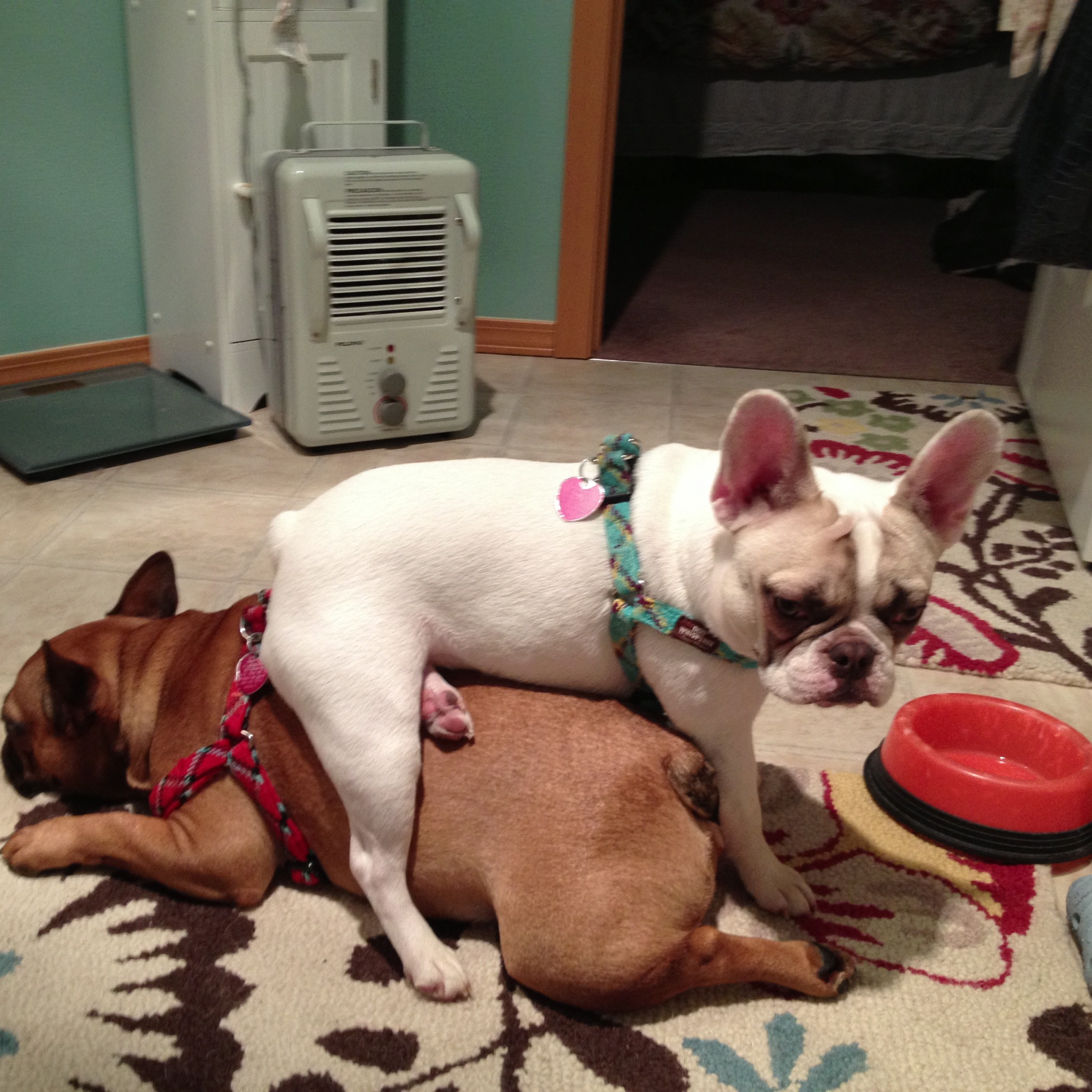
IMG_0640  Mo chillin in the window sun.

Funny, I posted my story about how our dog Maddie came into our lives “We Don’t Need A Damn Dog” and the next morning I came across this article in the New York Times by Jane E. Brody, “Life With A Dog: You Meet People.”

Mrs. Brody writes that she has been a widow for nearly 4 years and felt acquiring a four legged friend would be a better option that a two legged one. That comment made me chuckle. And this observation about those who encourage and those who discourage your dog ownership.

“While most dog owners I know encouraged my decision, several dogless friends thought I had lost my mind. How, with all my work, travels and cultural events, was I going to manage the care of a dog?

No one asked this when I decided to have children. In fact, few people consider in advance how children will fit into their lives. If you want a child badly enough, you make it work.”

One of my work friends responded to our addition of Maddie to our home with “Why the hell did you get a dog?”  Non-dog people just don’t get it.

Another passage that rang so true was about how much her little furry friend makes her laugh.

“Yes, he’s a lot of work, at least at this age. But like a small child, Max makes me laugh many times a day. That’s not unusual, apparently: In a study of 95 people who kept “laughter logs,” those who owned dogs laughed more often than cat owners and people who owned neither.”

Mo apparently doesn't get "Doggy Style"

Mo apparently doesn’t get “Doggy Style”

Our two crazy dogs crack us up everyday with silly antics. They also seem to instinctively know when we have had a terrible day or need some love and attention. When my husband recently came home after a stint in the hospital those two wouldn’t leave his side for days, just very mellowly hanging out with him until he felt better.

And as the title of the article states: “Life with Dogs: You meet People” she writes of the number of people that she has met because she has her little Max.

“But perhaps the most interesting (and unpremeditated) benefit has been the scores of people I’ve met on the street, both with and without dogs, who stop to admire him and talk to me. Max has definitely increased my interpersonal contacts and enhanced my social life. People often thank me for letting them pet my dog. Max, in turn, showers them with affection.”

Because of Maddie and Mo my husband and I know most of our neighbors; well I should say most of our neighbors children. We can not walk through our little neighborhood without some of the kids shouting “Maddie and Mo”, “Maddie and Mo” and stopping us so they can shower some love on the two of them and get kisses in return. And these two are little social butterflies, they just bask in all the love and attention.

Jane Brody’s article also goes on to share some common sense tips before acquiring a canine companion as well as links to other studies about the benefits of having a pet in your life.

Having Maddie and Mo in our lives has definitely had it’s challenges, from the chewed molding around the house that we are still saving to have repaired, to the middle of the night potty runs and the occasional scuffle over food.  But every challenge has been met by three times the joy from the love they shower on us and the laughter that they bring to our lives everyday. I can’t imagine my life with out them in it!

Do you have a pet in your life?

Life is good Pet Tees

Character Development

   Developing my own character as a writer.

I have been trying to write regularly about any and everything to get in the habit of daily writing. Some of it is for this blog, some for me and some for that novel I always had running in my head. To keep me on track I have been checking out different writing and author sites and this one caught my attention, The Write Practice. They have a writers prompt that you get when you subscribe to their blog and they had an interesting article about using of the Proust Questionnaire to help you develop more deeply the characters in your story to help you get to know them better.

Some of you may know this questionnaire from the back page of Vanity Fair magazine or a version of it from Inside the Actors Studio where host James Lipton asks a version of the questionnaire that was used by a French show host named Bernard Pivot.

So I thought I would complete the questionnaire as the writer I want to be so that you can get to know me a little better. And if you are game; I would love for you to complete it too so that I can get to know you better.

What is your greatest fear?  Losing my mind
What is your current state of mind?  Stressed out
What is your favorite occupation?  Writer
What historical figure do you most identify with?  Katherine Hepburn, I am a bit of a ball buster too.
Which living person do you most admire?  Anyone you sacrifices to help others in need.
Who is your favorite fictional hero? Wonder Woman
Who are you real-life heroes? The police who sacrifice and take crap everyday
What is your most treasured possession? My family
When and where were you happiest?  Alone writing with a nice cup of coffee
What is your most obvious characteristic? Tall and talk a lot
What is the trait you most deplore in yourself? Smartass
What is the trait you most deplore in others? Cruelty to humans or animals
What is your greatest extravagance? None – I am a state employee that wants to write – I can’t afford extravagance.
What is your favorite journey? Any road trip
What do you most dislike about your appearance? Big nose and 20 extra pounds
What do you consider the most over-rated virtue? Hard worker
On what occasion do you lie? When it will hurt another’s feelings
Which words or phrases do you most over-use? “Living the Dream” and “SSDD”
If you could change one thing about yourself, what would it be? I wish I could sing!
What do you consider your greatest achievement? Being married to the same man for 24 years when everyone said it would never last.
Where would you like to live? Near the water
What is the quality you most admire in a man?  Humor and intelligence
What is the quality you most admire in a woman? Honesty and humor
What is it you most dislike?  Mans inhumanity to man.
What do you value most in you friends? That they continue to put up with me
How would you like to die?  quickly
If you were to die and come back as a person or an animal, what do you think it would be?  Rock star would be the wish, but likely a man with a bad attitude.
If you could choose an object to come back as, what would you choose? Big piece of busy machinery.
What is your motto, the words you live by or that mean a lot to you?  I try to remember to “Don’t sweat the petty things and don’t pet the sweaty things!
Who has been the greatest influence on you? My family

What do you think, will you take the questionnaire?

Do You Meditate? Why Not – Everyone Else Is!

New England 2007-23  Do you meditate?

I don’t really, but I have been sorta of trying. It seems like every article or blog I read lately has something about meditating and how much it benefits your life.

Gwyneth Paltrow, the actress and lifestyle guru always has something “new age” on her site GOOP. This is from her New Years Resolution to start meditating post  and this excerpt is from Mark Epstein, MD the author of a number of books about the interface of Buddhism and psychotherapy.

“Meditation, as taught by the Buddha, was a means of taming the mind by bringing the entire range of thoughts, feelings and physical sensations into awareness, making the unconscious conscious. There were already various forms of meditation widely practiced in the Buddha’s day but they were all techniques of concentration. Buddha mastered each of them but still felt uneasy. It was fine to rest the mind on a single object: a sound (or mantra), a sensation (the breath), an image (a candle flame), a feeling (love or compassion), or an idea. This gave strength to the mind, a feeling of stability, of peace and tranquility, a sense of what Freud came to call the ‘oceanic feeling’. While this could be relaxing, it did not do enough to change the mind’s complexion. Buddha was after something more.”

Another blog I enjoy, Zenhabits, also had an article recently on “The Most Important Two Minutes of Your Life

I’ll save you the suspense: it’s two-minute meditation. And it’s extremely simple: take two minutes out of your extremely busy day (cat videos) to sit still and focus on your breath. Just keep the gentle fingertip of your attention on your breath as it comes into your body, and then goes out. When your mind wanders, take note of that, but then gently come back to the breath.

Almost all of the articles tout the ease as well as the difficulty of meditation, but how much better, uncluttered, relaxed, zen, etc, etc you will feel. And, if you practice often enough it will become a tool you can invoke at anytime.

Another article by Dan Hurley in the New York Times Magazine that had a section that took me a bit by surprise, it includes the work of psychologist Amishi Jha’s with the U.S. military, helping solders learn to meditate to better their performance in combat situations. An excerpt from the article;

We found that getting as little as 12 minutes of meditation practice a day helped the Marines to keep their attention and working memory — that is, the added ability to pay attention over time — stable,” said Jha, director of the University of Miami’s Contemplative Neuroscience, Mindfulness Research and Practice Initiative. “If they practiced less than 12 minutes or not at all, they degraded in their functioning.”

So much for new age, hippy dippy make yourself and the world more relaxed. The article also talks about some of the down sides of too much mindfulness; that it can inhibit your creativity and stifle your ability to let your mind wander to the benefit of your life. But the final paragraph from the article sums up the “sacrilege” versus using new tools to be better at what ever you do in life.

“After meditating upon such sacrilegious findings, no doubt the Buddha, who taught a middle way between worldly and spiritual concerns, would have agreed that there is a time for using mindfulness to discover inner truths, a time for using it to survive a battle or an exam and a time to let go of mindfulness so that the mind may wander the universe.”

I am generally a skeptic, but I have been so stressed out by almost every aspect of my life lately that a hint of desperation is setting in, I am going to give this a try in earnest. Beginning today, I am going to meditate everyday for at least 2 minutes. I will follow-up on my experience and progress or in my case probable ineptitude in some upcoming posts. namaste.

Do you meditate or practice mindfulness? How does it improve your life or maybe the lives of those around you?


Retirement

IMG_0559   That elusive day way off in the distance when I can give my suits to Goodwill, ride off into the sunset and do what I want. But what?

My husband, as I mentioned in a previous post, is a lot older than I am and can technically retire whenever he feels like it. A pension and social security are ready and waiting for the day he decides he doesn’t want to or can not work any longer. But he doesn’t want to retire just yet. He says “I’m not ready”, “What would I do with myself all day?” and  “I don’t want to just sit in the house and stare out the window until you come home from work.”  But what could he do with his time if he wasn’t working? He says he has no idea.

A recent New York Times article by Tara Siegel Bernard about Coping When Not Entering Retirement Together talks about the need to communicate, the feelings of guilt on the retirees part about spending money when the other spouse is still working and working out your schedules. An excerpt;

With more and more baby boomers retiring each year, either by choice or because they lost their jobs in the economic downturn, many couples must coexist, if only temporarily, in different phases of life. Living two different realities can lead to a variety of challenges, both financial and emotional, from brewing resentments about how a partner is spending free time, to how to reconcile the spending mind-set of a retiree and of someone still collecting a paycheck.

I would probably be a little jealous of his free time, but I also know he has more than earned the right to retire when he’s ready.

But I don’t want to get to 67 and not have that next thing to engage my life. In fact I want more things than work to engage in now; which is part of the reason I began this blog so that I can begin to enjoy one of my passions. Retirement is 20 years away, I don’t want to keep planning on living the way I want to in 20 years, I want to do it now. But how?

Also, there is “the bucket list”. I found several sites recently that are focused on helping and documenting people checking things off their bucket list. The Bucket List Society and The Bucket List Blog are a couple I found interesting. My list is long and mostly filled with places that I want to travel to; Scotland, Japan, Thailand, India, Vietnam, Peru, Venezuela, Cuba, Alaska, Kenya and on and on. I have two friends that are travel addicts and am quite envious before and after every trip they take.

I have been stuck for awhile, but I am slowly figuring out my next steps, what brings me fulfillment and happiness and I am evaluating what and who I want in my life and I am going to make those things happen.

Do you have a plan for life after retirement or to live the life you want now?

Some Day

OLYMPUS DIGITAL CAMERA   I married an older man. I mean classic cradle robbing older man younger woman kind of older man. I have loved him for nearly 30 years now and hope to love him for 30 more.
This week our lives changed, not in a major, sudden or dramatic way from an accident or an unexpected area of our lives, but from something we have been facing for nearly a year. I knew it was coming, really knew it would happen some day. Still, when “some day” actually arrived, no matter how much I thought I had prepared and planned for it, run it through my mind, it still made me catch my breath, stopped my heart a bit and unsettled me.
I have been on the verge of crying most of the week. Crying for my husband who is handsome, smart and very special who now will have to carry an oxygen tank with him everywhere he goes, who on hearing the news asked to cancel our impending road trip, doesn’t know how to deal with the questions that will come at work and I think is just plain scared about the path ahead in these “f’ ing golden years” as he likes to say. But also on the verge of crying a little bit for myself and feeling guilty for it, because it’s not me with the lifestyle alteration, it’s him with the tank, not me. But it feels like it is me, with the limits being put on my life too. Now I’m tethered to my home, my world shrinking, options and doors being closed.
Like I said, I knew this day would come, it was inevitable. I planned for it, was warned of it, recognized it and still I am in a daze.

Start

Sun and Sand

“You can’t start the next chapter of your life if you keep re-reading the last one.” 

I have been re-reading a lot lately, time to flip to the next chapter.

I saw this on another blog on Tumblr and wanted to add it here! here is a link to the sources blog http://fromherheartapocalypse.tumblr.com